
Learning to Be Still
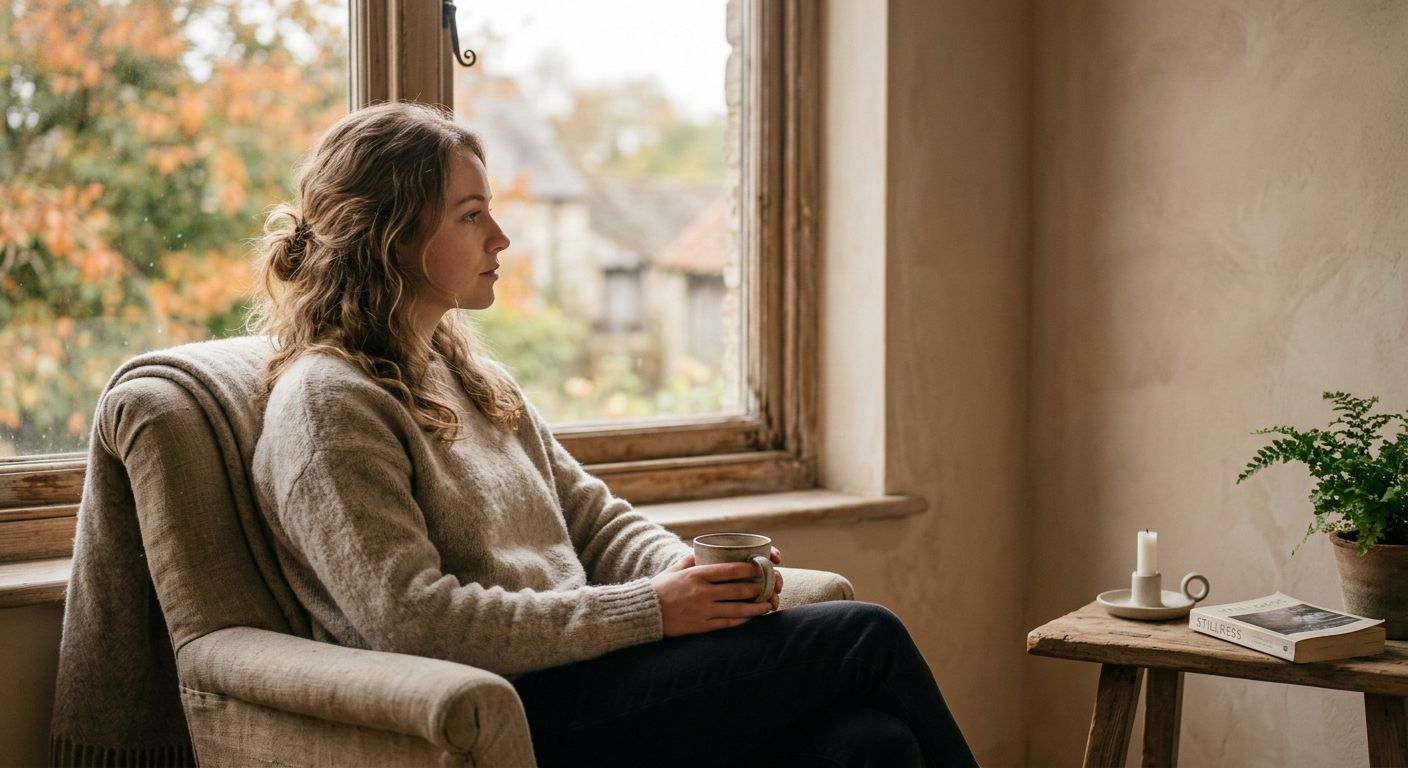
(Why Stillness Feels So Difficult)
May 4 — Discipleship in Real Life
Stillness sounds simple.
Sit.
Pause.
Be quiet.
And yet, for most of us, it is anything but easy.
The moment things slow down, something else speeds up.
Thoughts.
Worries.
Planning.
Replaying.
Filling the space.
Stillness is not difficult because nothing is happening.
It’s difficult because everything begins to surface.
1. We Are Used to Movement
Most of our lives are shaped by motion.
We:
- move from task to task
- fill gaps with activity
- avoid silence with noise
- keep ourselves occupied
Not always intentionally.
But consistently.
So when stillness arrives, it feels unfamiliar.
Even uncomfortable.
2. Stillness Exposes What We Carry
When we stop moving, we notice what we’ve been holding.
Thoughts we’ve pushed aside.
Concerns we’ve ignored.
Emotions we haven’t named.
Stillness doesn’t create these things.
It reveals them.
And that’s why we often resist it.
3. We Mistake Stillness for Inactivity
There’s a quiet assumption:
If I’m not doing something, I’m not being productive.
But stillness is not inactivity.
It is attention without distraction.
It is presence without urgency.
It is space where something deeper can be noticed.
4. Stillness Makes Room
When you stop filling every moment, something shifts.
You begin to:
- see more clearly
- hear more quietly
- notice more honestly
Not because something new appears.
Because something was always there.
Stillness makes room for it.
5. You Don’t Have to Get It Right
Stillness is not about achieving calm.
You will:
- get distracted
- drift
- fill the space again
That’s part of it.
The work is not to stay perfectly still.
The work is to return.
Again.
And again.
6. A Practice for May 4
Today, take one minute.
Just one.
No phone.
No task.
No input.
Sit.
And when your mind moves —
notice it.
Then gently return.
That’s enough.
The Invitation
May 4 reminds us that stillness is not the absence of life.
It is the doorway to it.
You don’t need to master it.
You just need to begin.
A moment at a time.
Monday through Saturday.
In the space you stop trying to fill.