
Learning to See Through Sacred Windows
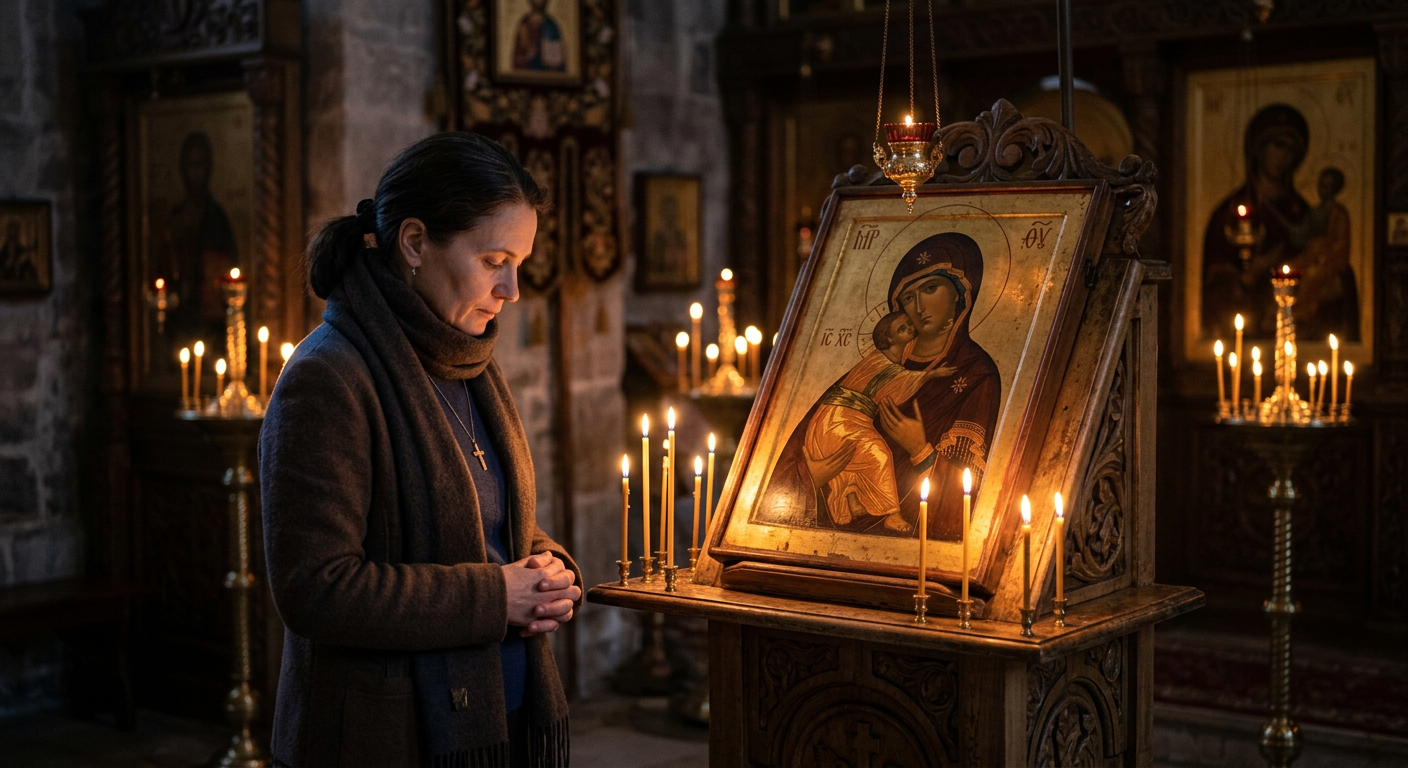
(The Spiritual Discipline of Iconography)
May 18 — Spiritual Disciplines | Discipleship in Real Life
We live surrounded by images.
Screens.
Advertisements.
Notifications.
Endless streams of visual noise competing for our attention.
Most images ask something from us:
- desire this
- consume this
- react quickly
- keep moving
And over time, our eyes become trained for speed rather than reverence.
Then iconography invites us into a completely different way of seeing.
Sacred images are not meant to capture our attention quickly. They are meant to deepen it slowly.
1. Icons Invite Stillness
An icon does not rush you.
It does not demand immediate reaction or emotional stimulation.
Instead, it quietly asks:
- remain
- notice
- behold
This is deeply countercultural.
Because most of life trains us to glance rather than gaze.
Iconography retrains attention through reverent stillness.
2. Sacred Images Become Windows
The purpose of an icon is not merely artistic appreciation.
It is attentiveness.
Icons function like windows:
not drawing attention to themselves,
but directing the heart toward deeper realities:
- Christ
- holiness
- humility
- grace
- the communion of saints
- the kingdom of God
The image is not the destination.
It is an invitation.
3. We Often Rush Toward Explanation
One of the hardest parts of contemplative disciplines is resisting the need to explain everything immediately.
We want:
- interpretation
- certainty
- emotional clarity
But iconography teaches patient attentiveness.
You sit quietly with the image.
You notice what draws your attention.
You remain present without forcing meaning too quickly.
And over time, deeper awareness begins to emerge.
4. Icons Reorient Desire
Much of modern imagery shapes our desires toward:
- consumption
- comparison
- distraction
- self-focus
Sacred imagery quietly reorients the heart toward:
- reverence
- worship
- humility
- attentiveness
- longing for God’s presence
This is not accidental.
What we repeatedly behold shapes us.
5. Contemplation Deepens Through Seeing
Sometimes words are not enough.
Not because truth becomes less important.
But because the soul also learns through:
- beauty
- silence
- symbol
- attentiveness
Icons remind us that worship is not only verbal.
It is also visual attentiveness directed toward God.
6. A Practice for May 18
Today, spend quiet time with a sacred image or icon.
Not quickly.
Slowly.
Notice:
- what draws your attention
- what emotions arise
- what questions surface
- what stillness emerges
Then pray:
“God, teach me to behold You more attentively.”
Remain there without rushing.
The Invitation
May 18 reminds us that discipleship is shaped by what we repeatedly behold.
In a distracted world, sacred attentiveness becomes an act of worship.
You do not need to force revelation.
You only need to slow down enough to receive what God may be quietly drawing your attention toward.
Monday through Saturday.
Through holy seeing.