
Liturgical Prayer
Discover how the spiritual discipline of liturgical prayer connects us with centuries of faithful believers and shapes our hearts through Scripture, historic prayers, and shared worship.
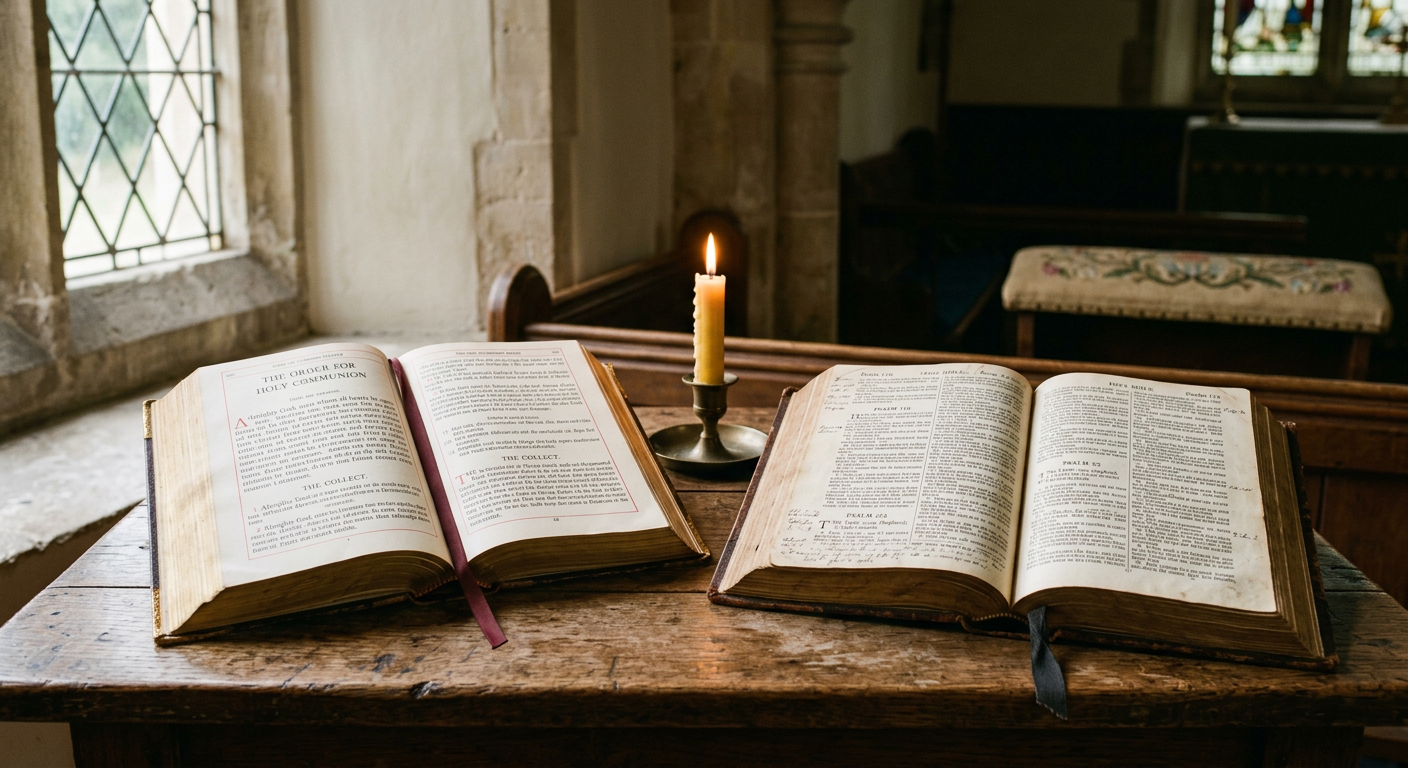
The Spiritual Discipline of Liturgical Prayer
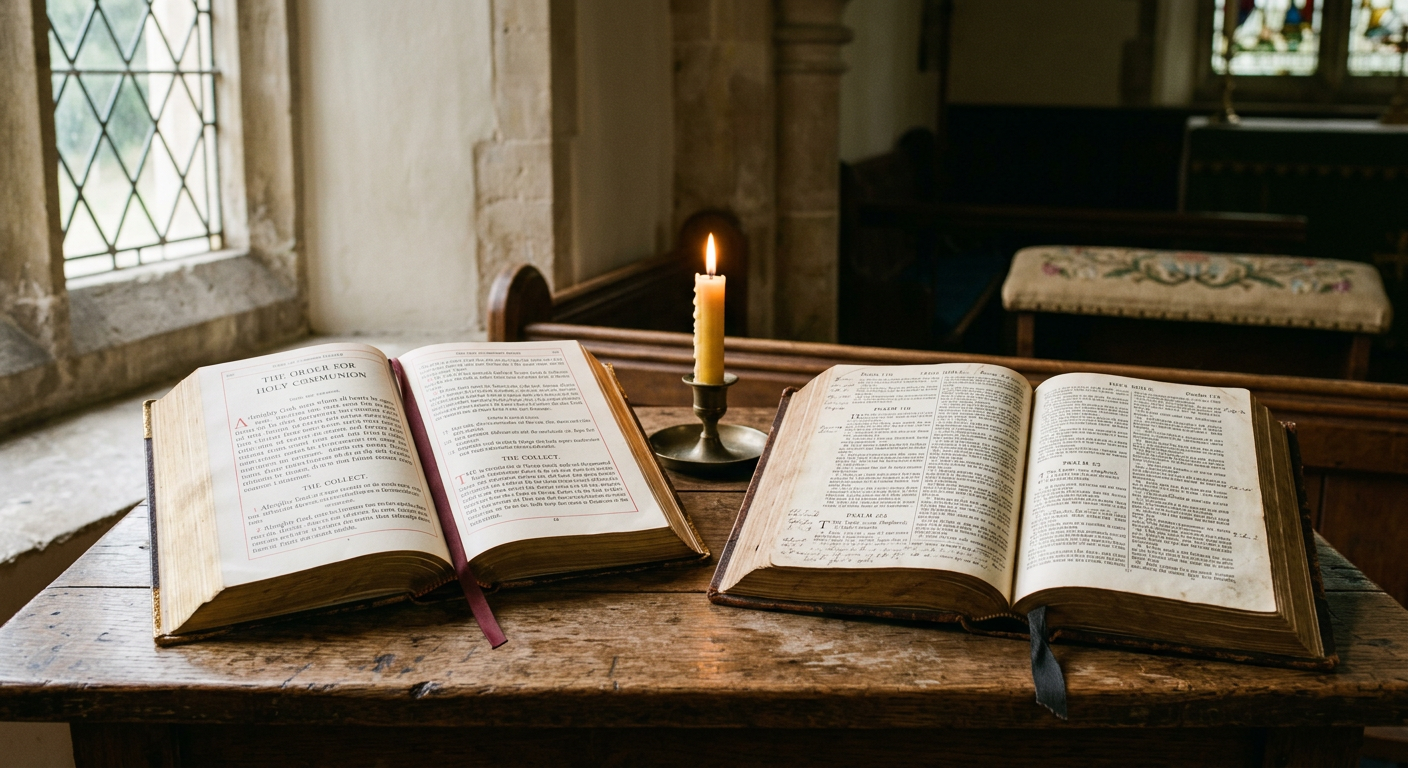
There are moments when our own words are enough.
We pray spontaneously.
Honestly.
Simply.
And God welcomes every one of those prayers.
There are other moments when words seem difficult to find.
Joy feels too overwhelming.
Grief too deep.
Confusion too heavy.
Our own language suddenly feels too small for what our hearts are trying to express.
In those moments, the prayers of the Church become a gift.
For centuries, followers of Christ have prayed words that have carried generations through:
- joy
- sorrow
- celebration
- repentance
- uncertainty
- hope
These prayers remind us that we never approach God alone.
We pray within a great communion of believers whose voices continue to strengthen our own.
One of the quiet gifts of liturgical prayer is that it rescues us from the illusion that prayer depends entirely upon our creativity.
Sometimes we believe that meaningful prayer must always be spontaneous.
Yet the Scriptures themselves are filled with prayers that God’s people returned to again and again.
The Psalms.
The Lord’s Prayer.
Ancient hymns.
Blessings.
Doxologies.
The Church has always understood that words repeated with faith can continue forming the heart.
The repetition does not make them empty.
Love itself often speaks familiar words.
Parents tell their children they love them countless times.
Spouses repeat promises that never become less meaningful because they have been spoken before.
The value lies not in novelty.
But in faithfulness.
Liturgical prayer also expands our perspective.
Left to ourselves, our prayers naturally center upon our immediate concerns.
Our needs.
Our questions.
Our struggles.
Written prayers gently widen our vision.
They teach us to pray for:
- the Church
- the world
- our neighbors
- those who suffer
- those who lead
- those who grieve
- those we have never met
Our hearts slowly become larger because our prayers become larger.
These prayers also shape our theology.
As we repeatedly pray words rooted in Scripture, we gradually begin seeing God more clearly.
His holiness.
His mercy.
His justice.
His compassion.
His faithfulness.
The prayers begin forming not only what we say but how we understand the God to whom we pray.
One of the most beautiful aspects of liturgical prayer is its humility.
Sometimes another believer has already found the words we desperately need.
Rather than insisting on our own language, we borrow theirs.
In doing so, we discover that their faith strengthens our own.
The prayers become companions.
Not substitutes.
They lead us toward God until our own hearts begin responding more freely.
This discipline also reminds us that we belong to a story much larger than ourselves.
The same words prayed by believers centuries ago continue to rise from churches around the world today.
Different languages.
Different cultures.
Different traditions.
Yet often the same prayers.
Together they become a chorus of worship stretching across time and place.
Today, pray a historic prayer.
Perhaps the Lord’s Prayer.
A Psalm.
The Prayer of Saint Francis.
The Book of Common Prayer.
A prayer from your own tradition.
Do not rush through the words.
Pray them slowly.
Allow each phrase to become your own.
Receive them as a gift from faithful believers who have walked with Christ before you.
The Invitation
Liturgical prayer reminds us that our faith is never lived in isolation.
We pray with the Church.
We pray alongside generations of believers whose words continue guiding our hearts toward God.
May we receive their wisdom with gratitude.
May their prayers deepen our own.
And may our hearts be quietly formed by the beautiful rhythm of faithful words offered across the centuries.
One faithful prayer at a time.